

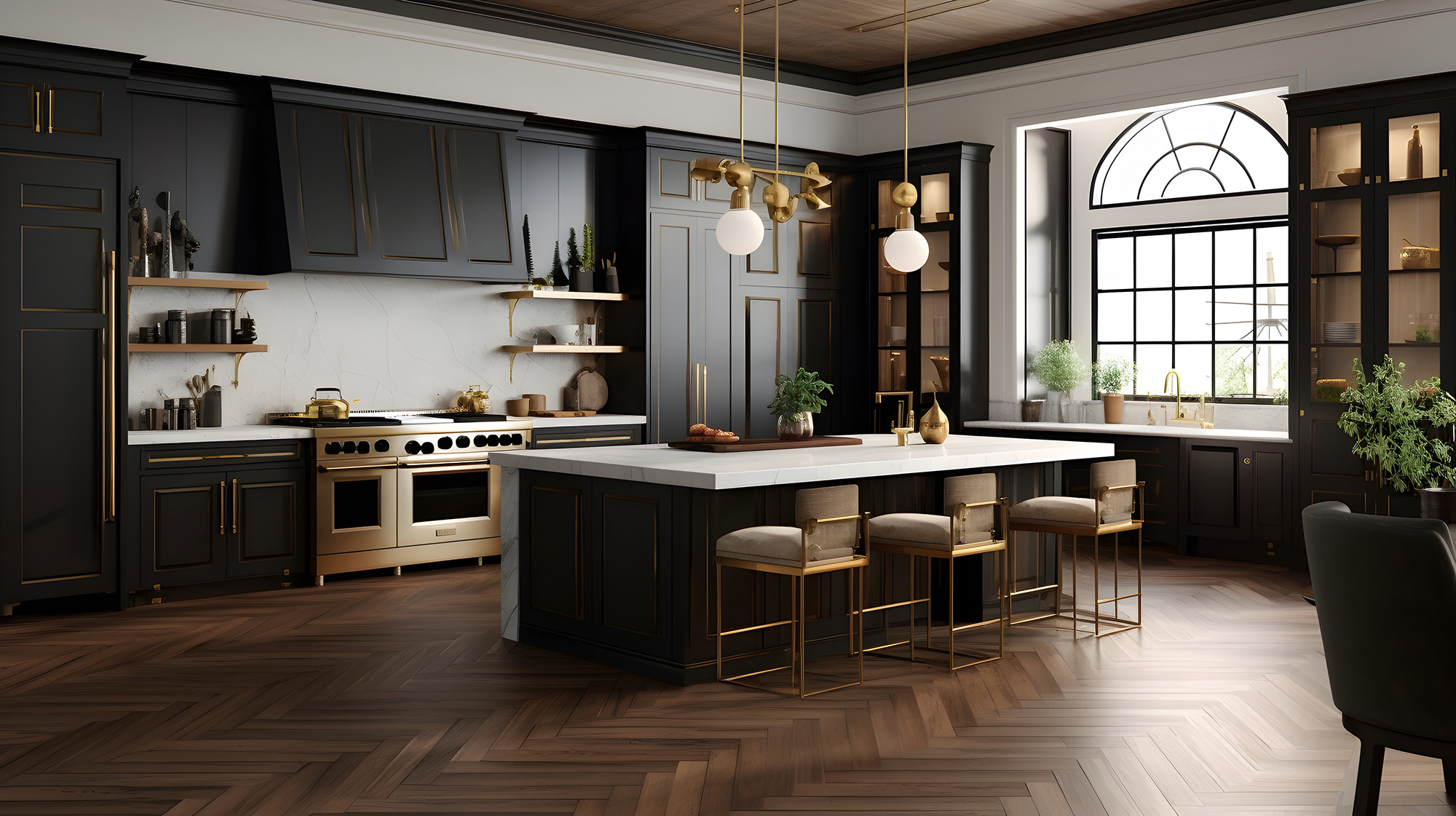
Patterned wood floors are everywhere right now, and for good reason. They add movement and craftsmanship that a standard straight-lay floor cannot. But in a center hall colonial, the choice between herringbone and chevron is not just a style preference. The architecture pushes you in one direction more than people expect.
The Real Difference Beyond the Look
Herringbone uses rectangular planks of equal size, laid at a ninety degree angle so each piece staggers against the next in a broken zigzag. The ends are cut square, which means less waste and a more forgiving install. Chevron uses planks cut on an angle, usually forty five degrees, so they meet point to point in a clean continuous V. That mitered cut is what gives chevron its sharp, tailored line.
That single difference drives everything else. Chevron costs more because the angled cuts create offcuts and demand tighter tolerances. Herringbone reads as more traditional and handles imperfect rooms better, which matters in older homes where nothing is perfectly square.
Why a Center Hall Colonial Changes the Math
A center hall colonial is built on symmetry. You walk into a central hallway with formal rooms balanced on either side. That long, narrow hall is your strongest design opportunity and your biggest constraint. Run the point of a chevron straight down the hallway axis and it pulls the eye toward the back of the home beautifully. Herringbone in the same hall feels classic and grounded, echoing the home's formal bones rather than fighting them.
For most colonials, herringbone is the safer fit. It suits the period, scales well in tighter rooms, and you can add a simple border or picture frame around the field to define each space. Save chevron for a wide foyer or an open rear addition where the bold directional line has room to breathe.
Subfloor and Moisture Come First
Patterns punish a bad subfloor. Any dip or hump telegraphs straight through, and with angled seams there is nowhere to hide it. Your subfloor should be flat within one eighth of an inch over a six foot span before a single plank goes down. On Long Island, seasonal humidity swings also matter, so engineered white oak with a stable plywood core is usually the smarter call over solid wood for patterned work.
Acclimate the material in the room for three to five days, confirm the subfloor moisture content, and use the right underlayment for your slab or joist setup. These steps are not glamorous, but they are the difference between a floor that looks tight in year five and one that gaps and lifts.
Picking the Right Wood and Tone for 2026
Cool gray floors have cooled off. Warm, honey toned white oak with a matte or wire brushed finish is leading the way, and it flatters the trim and millwork you already have in a colonial. Lighter natural oak also lets the pattern speak for itself, while very dark stains can make herringbone feel heavy in a small room.
Plank scale is the last lever. Narrower planks read more delicate and historic, wider planks feel current and relaxed. In a modest colonial hallway, a slightly narrower plank keeps the pattern from overwhelming the space.
Choosing between herringbone and chevron is far easier when you can see full size samples in real light. At Artistic Cabinetry, our team walks you through subfloor prep, wood species, and the layout that suits your home's footprint, so the floor looks designed rather than trendy. We proudly serve homeowners across Smithtown, St. James, Nesconset, Stony Brook, and East Setauket, NY.
Stop by Smithtown, NY to compare patterns and finishes in person, or contact us today to schedule your free design consultation and get an accurate, no pressure estimate.