

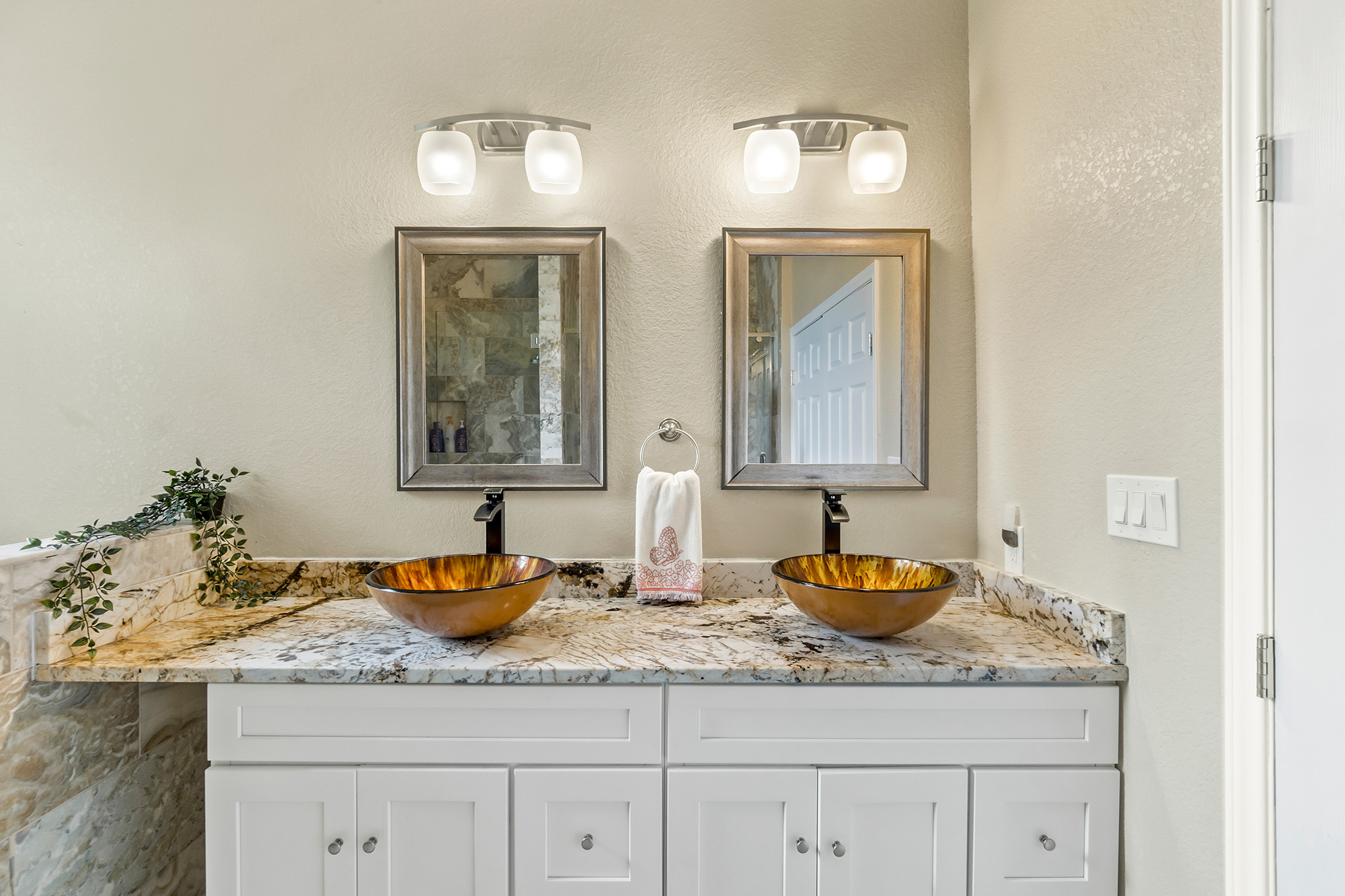
Homeowners are frequently surprised to notice their bathroom vanity looking tired years before their kitchen cabinets do, even when both were part of the same renovation. It is a fair thing to notice, and there is a real explanation behind it that has nothing to do with the quality of the cabinet itself.
The Environment Is Simply Harder on a Vanity
A kitchen deals with spills, grease, and heat, but a bathroom deals with something cabinets are not naturally built to withstand as well over time, which is constant humidity. Every shower and every hot bath sends moisture into the air, and that moisture settles on and around the vanity far more often than anything a kitchen cabinet typically faces.
This does not mean bathroom cabinetry is poorly made. It means the conditions are simply tougher. A finish that holds up beautifully in a dry kitchen can show its age sooner in a room where humidity levels swing every single day, especially around the sink base where water splashes are unavoidable no matter how careful a household is.
The Sink Base Takes the Most Direct Hit
Every vanity has one area that wears faster than the rest, and it is almost always the cabinet directly beneath the sink. Small drips from hands, toothbrushes, and daily grooming routines add up over years, and that moisture works its way into the wood or finish at the seams if it is not wiped away regularly.
Kitchen cabinets rarely deal with this same concentrated, repeated moisture exposure in one specific spot. A kitchen sink base gets used differently, generally with less direct water contact right at the cabinet face, which is part of why that particular wear pattern shows up so much more often in a bathroom.
A Few Habits That Genuinely Help
Extending the life of a bathroom vanity does not require anything complicated. Small daily habits make a real difference over the years, especially around the sink base where moisture collects most.
A few things worth doing consistently:
Wipe down the counter and cabinet face near the sink after use
Run the bathroom fan during and after a shower to cut down on ambient humidity
Address any small water damage or swelling early instead of waiting
Ventilation Plays a Bigger Role Than Most Homeowners Realize
A bathroom without adequate ventilation puts extra strain on everything in the room, including the vanity. Steam that lingers after a shower has nowhere to go, and that trapped humidity settles on cabinet surfaces for far longer than it would in a well ventilated space.
Running the fan for a full cycle after a shower, rather than shutting it off the moment the water stops, gives that trapped moisture a real chance to clear the room. It is a small habit, but over the course of several years it can meaningfully change how a vanity's finish holds up compared to one in a room where humidity is left to linger.
When it is time to update a vanity, choosing materials suited to a humid environment from the start makes a noticeable difference down the road. Moisture resistant finishes and construction methods built specifically for bathrooms hold up differently than a standard cabinet finish would in the same space.
This is one of the reasons it is worth having an actual conversation with a designer rather than assuming any cabinet line works equally well in every room of the house. A kitchen cabinet and a bathroom vanity may look similar on a showroom floor, but the way they are built for their environment is not always identical.
Artistic Cabinetry designs bathroom vanities built to handle the everyday realities of a working bathroom, for homeowners throughout Smithtown, St. James, Nesconset, Stony Brook, and East Setauket, NY. Our design consultants can walk you through which finishes and constructions genuinely hold up best in a bathroom setting.
If your vanity is starting to show its age, contact us to talk through your options. Explore our full range of cabinetry at Smithtown, NY, including vanities designed specifically for bathroom use.