

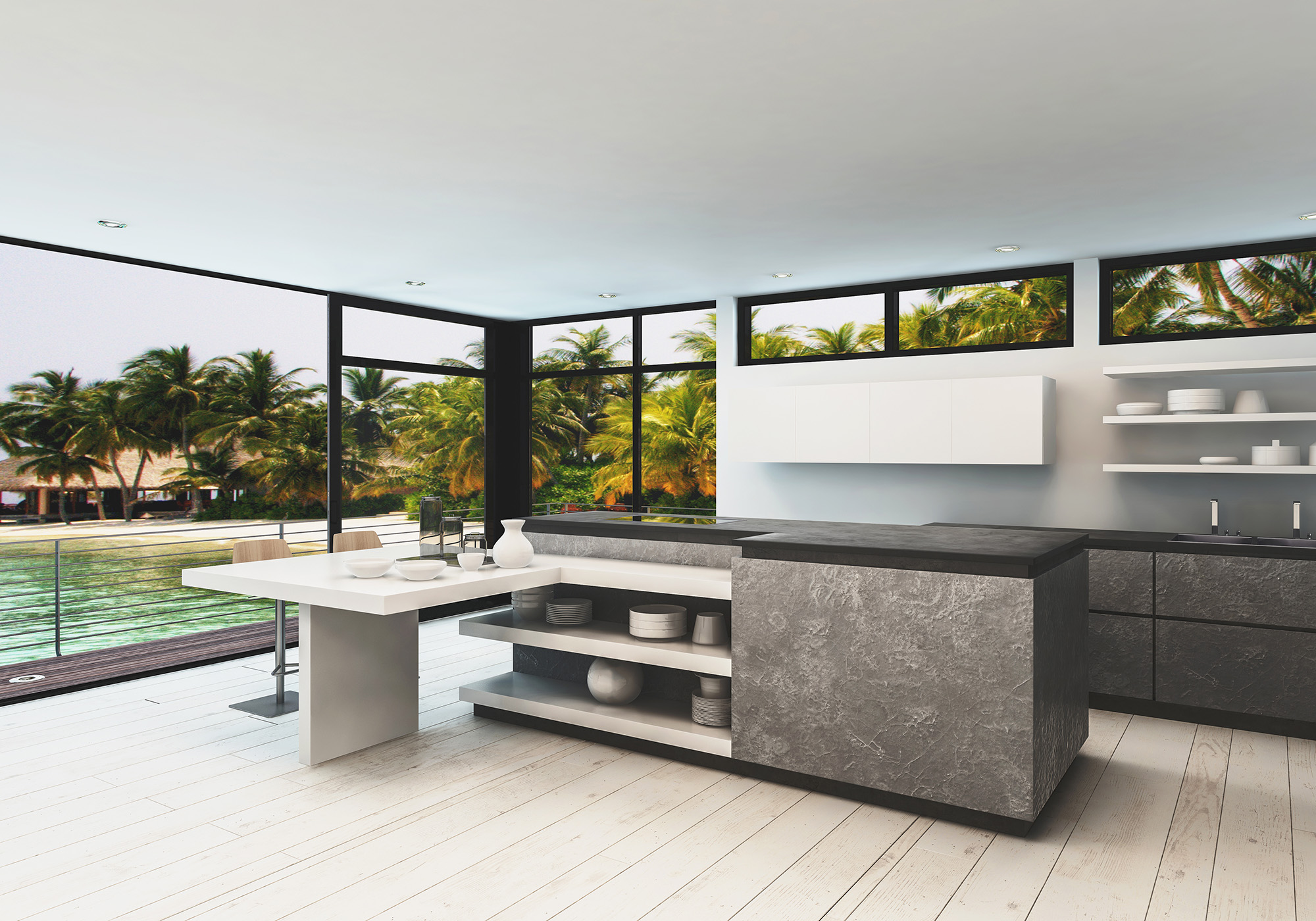
Open shelving creates a sense of openness and visual lightness that closed cabinets cannot replicate. It allows homeowners to display curated items, making the kitchen feel more personal and less like a utility space. In design photography, this creates clean sightlines and a styled, intentional look.
However, what works in controlled photo environments often does not translate directly into daily use. Real kitchens involve constant movement, varied storage needs, and items that are not visually curated. The gap between design intent and functional reality becomes noticeable quickly.
Storage Capacity and Practical Limitations
Open shelves reduce overall storage capacity compared to full cabinetry. Without doors, items must be arranged neatly at all times, which limits how much can be stored and how quickly things can be accessed or put away.
Closed cabinets allow for layered storage, hidden organization systems, and flexibility. Open shelving removes that flexibility, requiring every item to serve both a functional and aesthetic role. This constraint becomes more challenging in smaller kitchens where storage efficiency matters most.
Cleaning and Maintenance in Everyday Use
Dust, grease, and cooking residue accumulate on open shelves more quickly than most homeowners expect. Items stored on these shelves require frequent cleaning, especially in kitchens with regular cooking activity.
Closed cabinets protect contents from airborne particles and reduce cleaning frequency. With open shelving, maintenance becomes ongoing, not occasional. This shift in upkeep is often underestimated during the design phase.
Workflow and Accessibility Considerations
Open shelving can improve accessibility for frequently used items when placed strategically. Plates, bowls, and everyday glassware can be easier to reach without cabinet doors.
However, this benefit only applies when the layout is carefully planned. Poor placement can disrupt workflow, forcing users to reach across active zones or navigate around obstacles. Closed cabinetry offers more flexibility in organizing items based on use rather than display.
When Open Shelving Actually Works
Open shelving works best when used selectively rather than as a full replacement for upper cabinets. Integrating a few shelves for display while maintaining closed storage for the majority of items creates balance.
This hybrid approach allows homeowners to achieve the desired aesthetic without sacrificing practicality. It also reduces maintenance demands while still introducing visual interest into the kitchen.
Open shelving is not inherently flawed, but it requires a clear understanding of how you use your kitchen. Without that, it quickly shifts from a design feature to a daily inconvenience.
Visit Artistic Cabinetry at Smithtown, NY to explore cabinetry solutions that balance aesthetics and function. We serve Smithtown, St. James, Nesconset, Stony Brook, and East Setauket, NY including Smithtown, St. James, Nesconset, Stony Brook, and East Setauket. Contact us to design a kitchen that works in real life, not just in photos.